

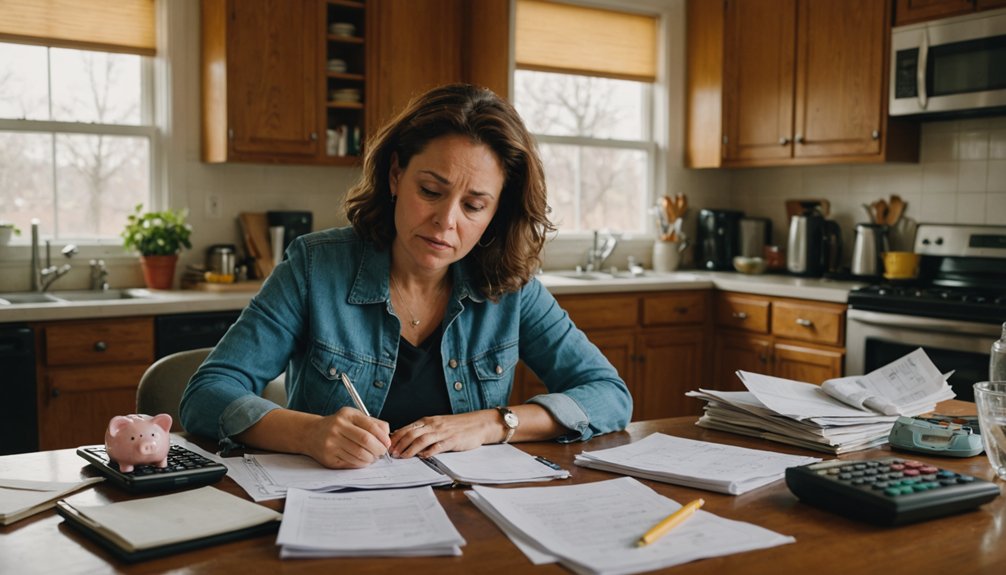

Setting up emergency savings on a tight budget may seem challenging, but it’s an essential step in achieving financial stability. By starting small and prioritizing expenses, individuals can create a safety net for unexpected costs. A well-planned approach can help identify areas to cut back on non-essential spending, making it possible to allocate funds towards savings. With the right strategy, anyone can begin building a financial cushion, but where does one start?
Highlights
- Start small by setting aside manageable amounts regularly to develop a consistent savings habit and gradually increase the amount saved.
- Prioritize expenses by categorizing, evaluating essential vs. non-essential expenses, and identifying areas for potential cutbacks or eliminations.
- Choose the right savings account that suits emergency savings needs, considering interest rates, fees, and accessibility.
- Make savings automatic by setting up transfers from checking to savings accounts to ensure consistent progress towards savings goals.
- Cut back on non-essential expenses by reassessing discretionary spending habits, implementing grocery hacks, and canceling unnecessary subscriptions.
Start Small: Why Every Little Bit Counts
For many individuals living on a tight budget, setting aside a substantial amount for emergency savings may seem like an overwhelming task.
However, starting small can lead to significant progress over time. This approach is often referred to as micro savings, where individuals set aside a manageable amount regularly, no matter how small.
The key is to focus on incremental growth, gradually increasing the amount saved as financial circumstances allow. By adopting this mindset, individuals can develop a savings habit that becomes second nature.
As the savings grow, so does the sense of security and belonging to a community that values financial preparedness. By starting small, individuals can take the first step towards building a safety net that will serve them well in times of need.
Prioritize Your Expenses to Free Up Money
While creating an emergency fund is essential, it often requires making adjustments to one’s budget to free up money for savings.
To prioritize expenses effectively, one must first understand where their money is going. Expense tracking is an important step in this process, as it allows individuals to identify areas where they can cut back.
Start by categorizing expenses into budget categories, such as housing, food, transportation, and entertainment. Then, evaluate each category to determine which expenses are essential and which can be reduced or eliminated.
Choose the Right Savings Account for Your Needs
Once individuals have freed up money in their budget for emergency savings, they must consider where to place these funds. A savings account is the most suitable option, but choosing the right one is essential.
High yield accounts offer higher interest rates than traditional savings accounts, allowing individuals to earn interest while their money sits. Online banks are a viable option as they often offer competitive interest rates and low fees. Additionally, online banks provide easy access to accounts, allowing individuals to manage their funds from anywhere.
When selecting a savings account, individuals should consider factors such as interest rates, fees, and accessibility to guarantee they choose the best option for their emergency savings needs. This informed decision will help individuals feel secure and prepared for unexpected expenses.
Make Savings Automatic With a Set Schedule
Although creating an emergency savings fund can seem intimidating, incorporating automation into the savings process can make it considerably more manageable.
By setting up automatic transfers from a checking account to a dedicated savings account, individuals can guarantee consistent progress towards their savings goals. This approach eliminates the need for frequent, manual transfers, reducing the likelihood of missed payments or forgotten contributions.
To implement this strategy, one can schedule recurring transfers to coincide with their pay cycle or at regular intervals, such as weekly or monthly.
Cutting Back on Non-Essentials to Boost Your Fund
To augment their emergency savings, individuals can greatly benefit from reassessing their discretionary spending habits.
By implementing simple grocery hacks, such as meal planning, coupon clipping, and buying in bulk, households can markedly reduce their food expenses.
Additionally, subscription cancellations can also free up a substantial amount of money. Reviewing monthly subscriptions, like streaming services, gym memberships, and magazine subscriptions, can help identify areas where cutbacks can be made.
By cutting back on non-essential spending, individuals can redirect these funds towards their emergency savings. This conscious effort to reallocate resources can lead to a more stable financial future and a sense of security that comes with having a safety net in place.
Effective management of discretionary spending is key.
Conclusion
Setting up emergency savings on a tight budget requires patience and discipline, but it is achievable. By starting small, prioritizing expenses, and automating transfers, individuals can gradually build a safety net. Cutting back on non-essentials and choosing the right savings account can also enhance the fund. With time and consistency, a small emergency fund can grow, providing peace of mind and financial stability in the face of unexpected expenses.